The In-side collective consists of four artists: Aleksandra Kucewicz-Wasilewska (Bydgoszcz), Beata Bugaj-Tomaszewska (Łódź), Dominika Sergiej, (Lublin) and Katarzyna Łukaszewicz,(Warsaw).

They create in the following technical fields: artistic installation, video art, painting, collage, artistic object. On February 7, they will visit Włocławek to perform at the "Browar B" Cultural Center. show your exhibition entitled “Stitching and Layering.”

The artists say about their work:
“Four women, of different ages and at some stage shaped by four stories – WE – have joined forces in the In-side artistic collective. The name of the collective refers to the interior, to the nature of our differences, to following our own side paths, to worlds that are separate but not inaccessible, to worlds to which we want to invite the recipient, to worlds that we want to show. We would like to invite the viewer inside: our artistic installation "Letters resembling a huge artistic fabric", to the story "Uttered-unsaid in the form of video art" and to delve into our paintings, collages and artistic objects.
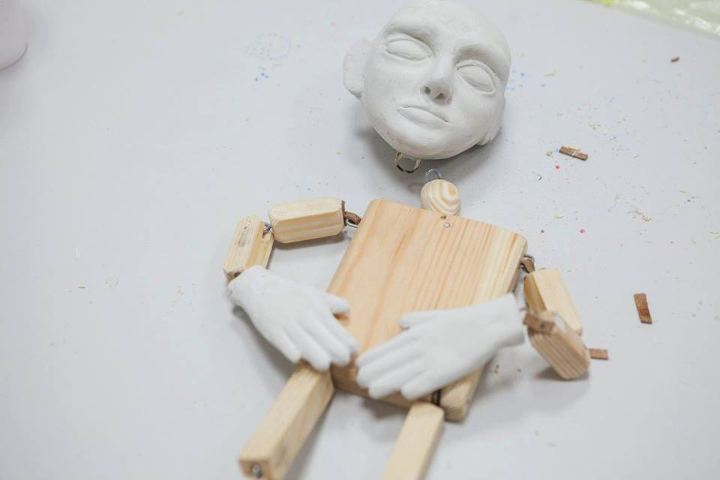
Let’s make marionettes / 2018 / Workshops of Culture / Lublin
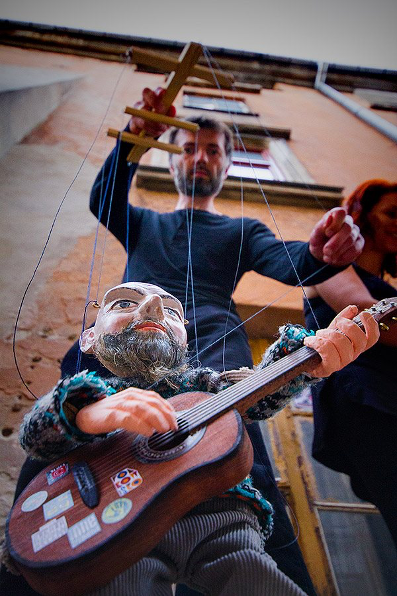
In 2018 Teatr Podręczny conducted workshops for people who wanted to learn how to make marionettes. Workshops of Culture were the main organizer of this event. The group of 11 participants learnt making marionettes. Agnieszka Soszyńska and Dominika Sergiej, both the members and organizers of Teatr Podręczny/Handy Theatre, spent a couple of weekends showing how to prepare and move a marionette.
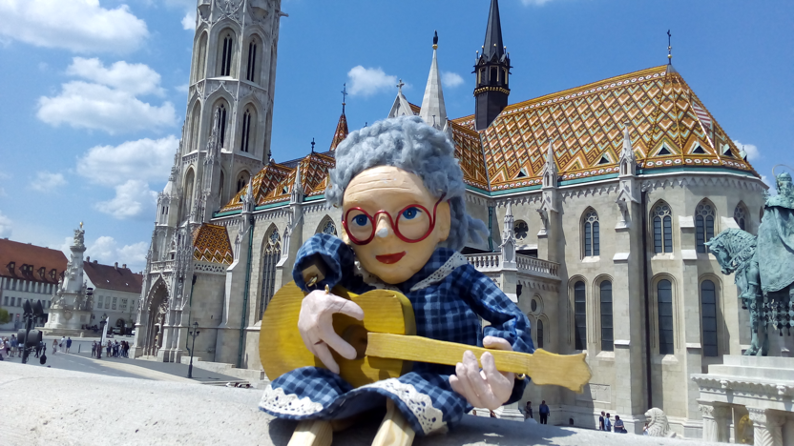
From April till October 2018 one of the marionettes belonging to the bigger band from the Orchestra went on Grand Tour around Europe visiting biggest cities in Europe inviting people to the show of the Orchestra and spreading the news about the marionette band. Cities visited included: Vienna, Budapest, Padova, Venice, Rome, Asisi, Montecassino, Pompei, Florence and many others.
A set of strolls What are we queueing for? was organized within The Walker– a programme which accompanies social-artist interventions which are carried out in the Kalinowszczyzna district in the framework of the Community Arts Lab (CAL) Residencies. In its first stage the project concentrated on training and workshops which aimed at preparing the participants to leading subjective walks around the district. As a result of search for alternative history, interesting and unique stories and personal narrations three trails of touring Kalinowszczyzna were designed by three different tour guides – Dominika Sergiej, Justyna Syroka and Agnieszka Mierzwa. At its core, The Stroller encourages to discover the city in an unusual way. The location of the project, Kalinowszczyzna district, is exceptional, so are our guides who uncover the mysteries of places which are often out of the main tourist trails, and they do it with commitment and passion.
Route description: The narrative of the route is constructed from stories of the turn of the 70s and 80s of the 20th century, that is from the guide’s childhood experiences. The period was marked with the communist times, when you had to stand in a queue for the simplest of notebooks or a pencil, every product (from chocolate to meet) was available only on ration coupons and one used to collect candy or chocolate wrap.
Main stops of the trail: Lwowska street 12 – Narnia (former household goods shop), Lwowska 24 – playground, a crossroad of Jacka Kuronia and Walecznych streets, Walecznych street – Jewish cemetery, Primary School nr 23/Kindergarten nr 50, Singer’s Square (former Bierut’s monument), Lwowska (milk bar Kaprys), Lwowska (Biedronka – former Kalinka Restaurant).
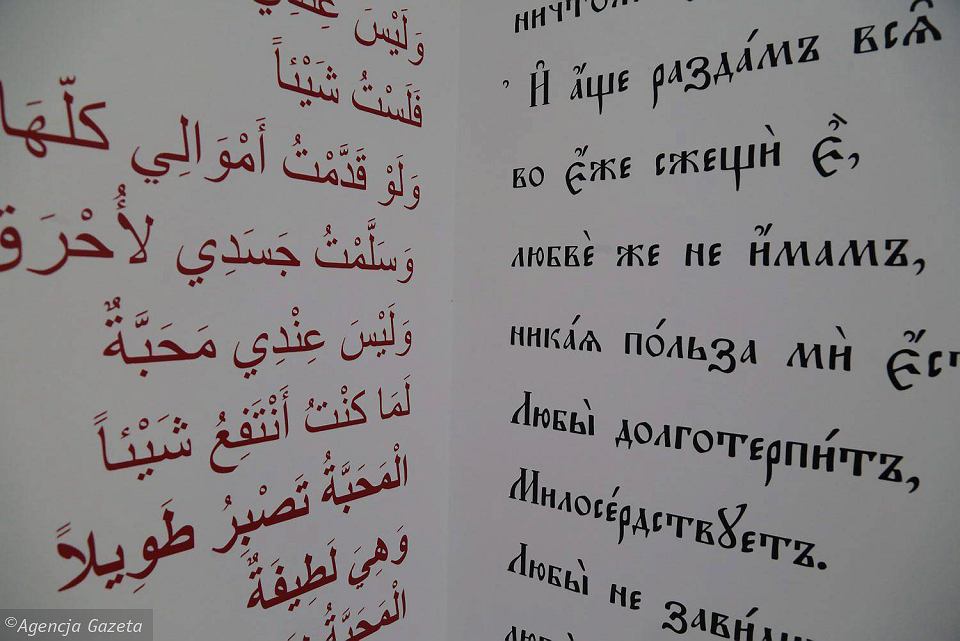
The project refers to the phenomenon of love, which is described in all the holy books of the world. Translating the suras of the Quran into Hebrew or fragments of the Torah into Old Russian-Slavic is the essence of the installation placed in the city of various cultures and religions that is Białystok. The Death of Love…is the project created in a place that once functioned as a cultural and religious melting pot of: Polish, Jewish, Muslim, Catholic and Orthodox people. To this day, echoes of its splendor can be felt in the subcutaneous tissue of the city of Białystok. The project refers the phenomenon of love, which is described in all the holy books of the world. Holy books read in synagogues, mosques, Catholic churches, Protestant congregations or Orthodox churches consume the souls of the faithful and not only. Is it enough? Why, despite so many holy, beautiful words, does love between majorities and minorities fade? Or maybe it is because majorities and minorities exist. The Death of Love… project tries to answer these and other questions.
Project created together with Małgorzata Wróbel-Kruczenkow – an artist from Białystok.
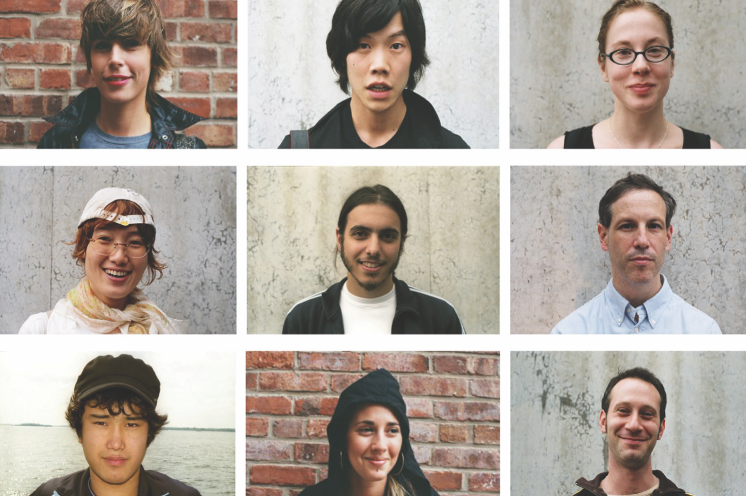
The Places-Non-Places project consists of a series of 27 photographs divided into three parts: people, places, everyman. The works were created in the years 2002-2007 and are a record of people met on different continents, in different countries and places. The work raises the problem of stereotypes concerning the appearance of people inhabiting a given area and the place itself. We carry certain cultural clichés that have arisen as a result of the photos or films we have watched. These ideas function and interact with our views on a given place or people. During meetings with a live person and a real place, we have to confront what we know about a given place and how we imagined it with what really exists. Often such a confrontation shocks us, removes the mask of the place, de-bunks the clichés rooted in us. The last set shows 9 multiplied versions of photographs showing one man-Everyman. He can appear in almost any cultural context. Each photo in the presented series is accompanied by a caption concerning the viewed place or person, placed at the very end of the presentation. It can be a big surprise for the viewer when he or she discovers a different identity of a place or person than he or she previously assumed.
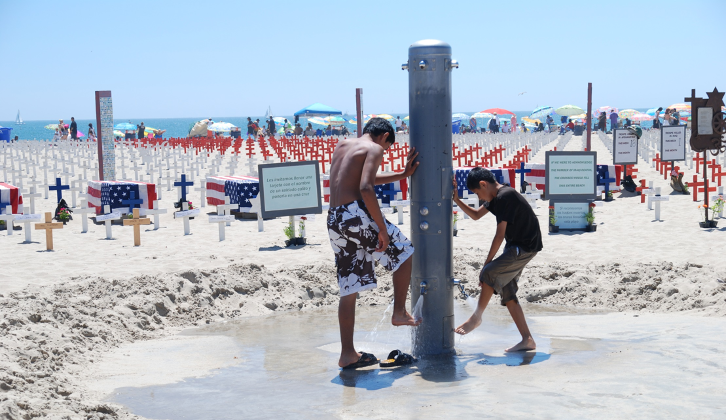
A 2009 photographic project made in Los Angeles showing the beach in Santa Monica during a holiday weekend. American Vietnam veterans, as part of a protest, placed the coffins of American soldiers killed in the Middle East on the beach every week. The number of coffins changed every week, showing the senselessness of the ongoing fighting. Beachgoers walked among the mass of crosses to have rest next to those who in symbolic coffins rested forever.
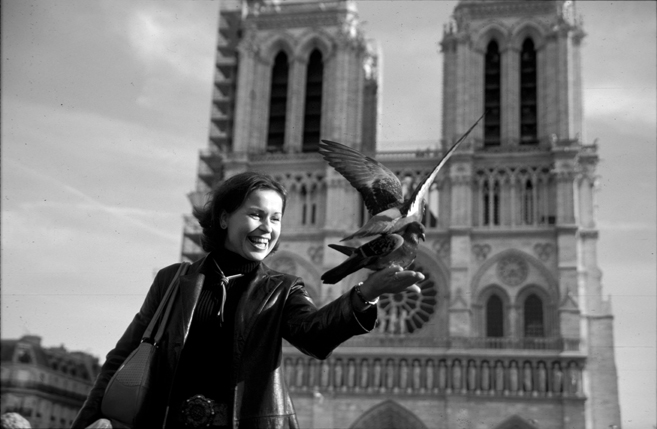
The works from the series CountryUrban images refer to cities, spaces and what constitutes their character and identity. Urban landscapes-vedutes so widely spread in the painting of the 17th, 18th and 19th centuries become the starting point of my works. Oil paints are replaced by felt-tip pens, pencils, coloured paper and photography. 18th century urban capriccias-“primitive collages”, in which artists freely juxtaposed various places that did not necessarily exist next to each other in reality in the urban tissue of the city, became an inspiring contribution to the creation of this series. The collage technique in the strict sense initiated by Pablo Picasso and George Braque at the beginning of the 20th century, developed by many artists, including Hannah Höch, Man Ray or Dora Maar, Barbara Krűger, art books, illustrations, dioramas, comics and 18th century silhouettes cut out of paper before photography was invented, constitute the background of the technological inspiration of the exhibition. At the exhibition “Urban landscapes” I present 16 works showing places that I have visited for a longer period of time or where I have lived, including Warsaw, Paris, Oxford. Some of the works are based on my own photographs taken with an analogue camera, including developing the films and processing them in the darkroom. The second part of the photographs is a digital photograph also taken by me. For uniformity, the photographic layer of the works is printed on matte paper.
In the content layer, I refer to stereotypical representations of the city, sometimes I duplicate them and sometimes I replace them with new, unconventional combinations. I also show situations that can often be found in vibrant cities. Sometimes I go back in time, referring to the colors or models of cars circulating on the streets of Polish cities, especially Warsaw in the 60s or 70s. This transfer in time was inspired by furniture, old things, washing machines, armchairs or abandoned cars found on the streets of Praga Południe, where I live, or restored buses full of tourists circulating in these areas. Thanks to this exhibition, you can look at the city with a slight twinkle in the eye, and the works have the character of loose, sometimes funny associations on the subject of the urban landscape.